workspaces.subsite
menu

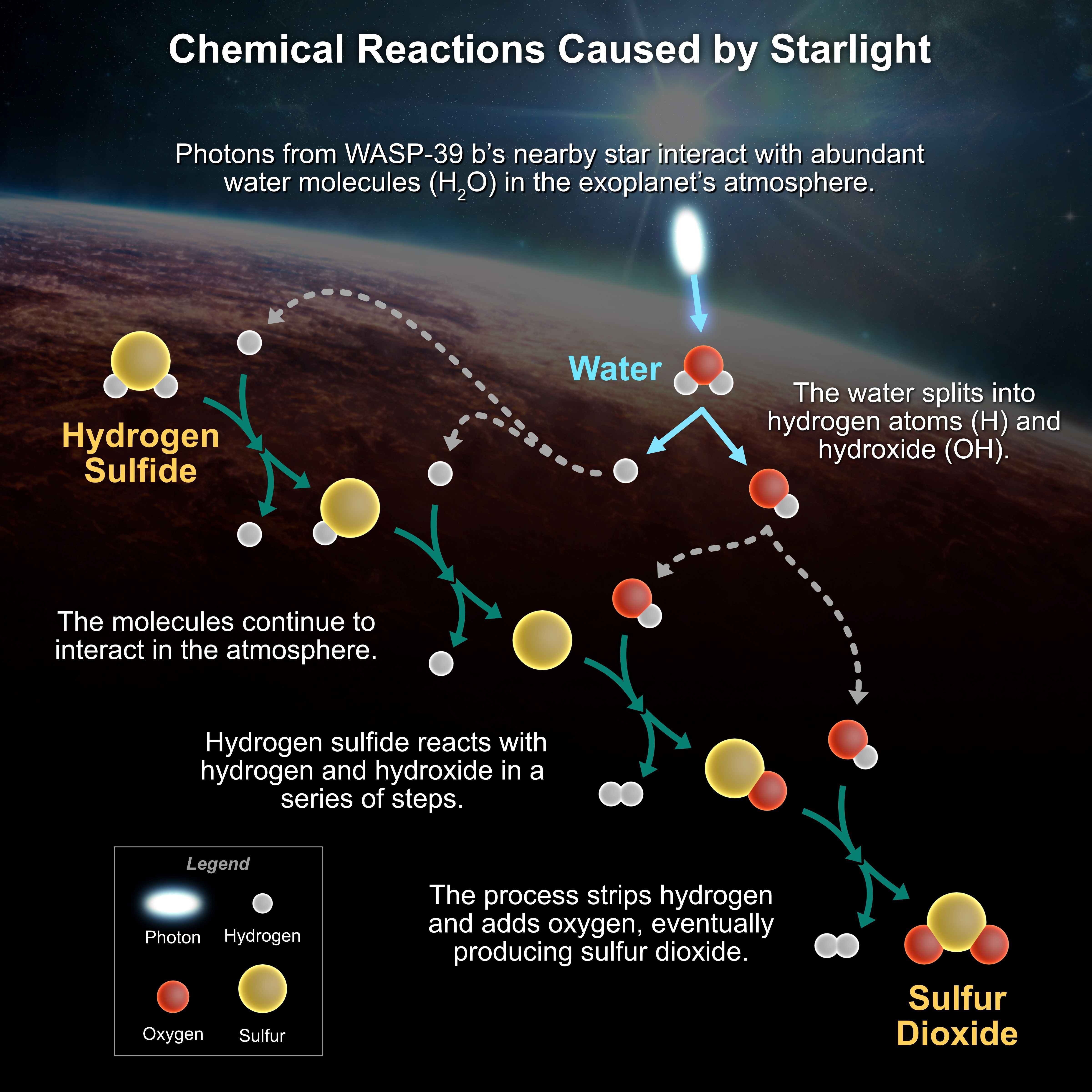
NASA’s James Webb Space Telescope made the first identification of sulfur dioxide in an exoplanet’s atmosphere. Its presence can only be explained by photochemistry – chemical reactions triggered by high-energy particles of starlight. Photochemistry is essential to processes on Earth key to life like photosynthesis and the generation of our ozone layer. Credits: NASA/JPL-Caltech/Robert Hurt; Center for Astrophysics-Harvard & Smithsonian/Melissa Weiss
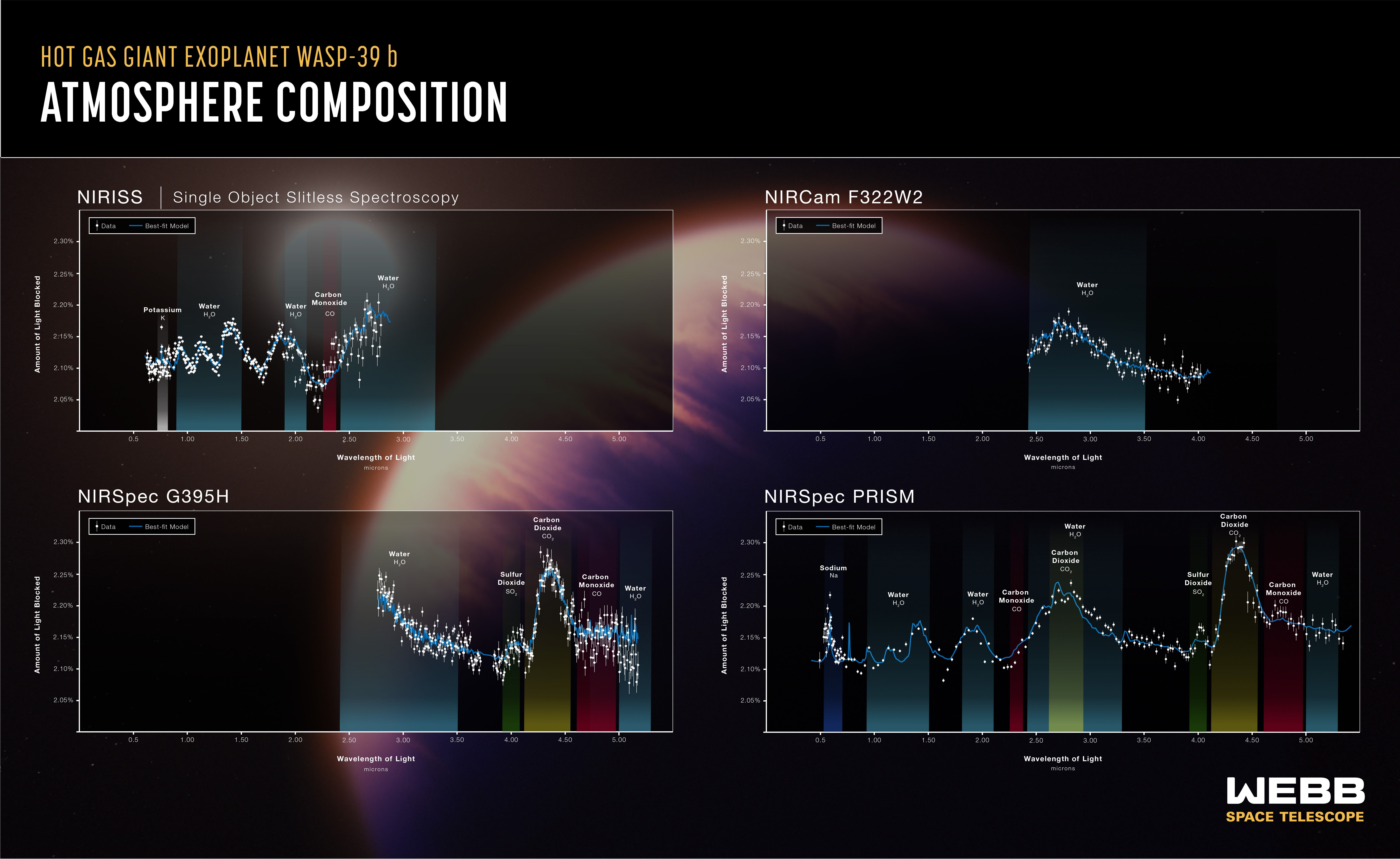
New observations of WASP-39b with the JWST have provided a clearer picture of the exoplanet, showing the presence of sodium, potassium, water, carbon dioxide, carbon monoxide and sulfur dioxide in the planet's atmosphere. This artist's illustration also displays newly detected patches of clouds scattered across the planet. Credit: Melissa Weiss/Center for Astrophysics | Harvard & Smithsonian